
As I climbed a series of perilously steep steps, sunlight bounced off the 43-meter-tall golden statue of Hindu god Lord Murugan next to me. The heart-pumping climb, broiling afternoon sun and my short sleep following the previous night’s flight from Shanghai left me a little dazed and wondering if the imposing statue guarding the entrance to the Batu Caves was real. It also made me ponder the irony of a Christian boy visiting a Hindu shrine in a Muslim country.
It wasn’t the first time I visited the shrine of a religion completely different from mine in Asia. Even if you don’t completely understand another religion, it’s fascinating what you can learn about your fellow humans and why they follow a certain religion by visiting one of their shrines. You learn how that religion influences a people’s customs and motivations, rituals and faith, hopes and fears. You also learn a little more about why you are drawn to that site in the first place.
Before arriving in Malaysia, I knew that I wanted to see something outside the city of Kuala Lumpur. Like many independent travelers in the 21st century, I turned to Instagram and a traveler community ranking site such as TripAdvisor for recommendations. Just 15 or 20 years ago, I would have first read about Batu Caves in Lonely Planet first. But at the end of the day, I still ended up here: climbing 272 steps to an ancient limestone cave system outside Malaysia’s biggest city.
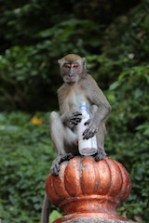 As I stopped for a breather in the searing sun near the top of the steps, I saw a monkey open a water bottle to my right. Even the monkeys seemed to be wise at this shrine. Looking downwards, I heard some flutes and saw a barefoot man in religious robes ascending the steps towards me while carrying what looked to be a 70-kilogram shrine on his shoulders. Approximately 20 to 30 Hindus cheered him on and counted as he took the steps upward towards the temple in the Ramayana Cave above. Then I noticed the wooden, semi-circular supports had sharp ends on a container that pierced his torso. A woman who traveled to the shrine with me said the massive brass carrier pot in the middle of the supports held many liters of milk, an offering to Lord Murugan.
If you ignored the rickshaws, cars and gridlocked highway nearby, you could imagine that this ritual had been going on for centuries. Except you would be wrong. This temple was only consecrated in 2001 and the Murugan statue was only completed in 2006. But already it has become one of the 10 holy shrines in the world for Lord Murugan, and one of the four in Malaysia.
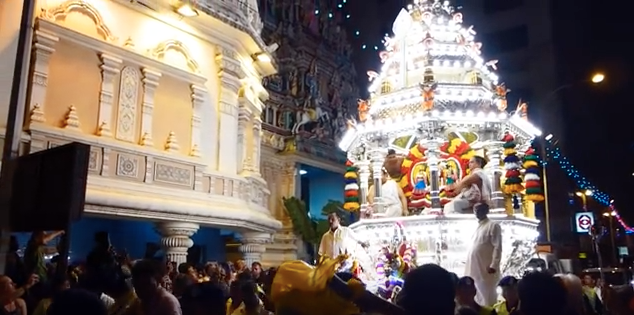
Before I went to sleep the night before in Kuala Lumpur, I saw thousands and thousands of Hindu pilgrims marching in the streets of KL from the Sri Maha Mariamman Temple on the eight-hour procession to this Sri Subramaniam Swamy Temple at the top of Batu Caves. This event is the main focus of the Hindu community’s yearly Thaipusam festival and attracts Hindus from around the world. Scores of devotees carried a silver chariot illuminated in lights, symbolic of Lord Murugan’s chariot. Behind the chariot, thousands of additional pilgrims in colorful robes followed carrying their containers of milk.
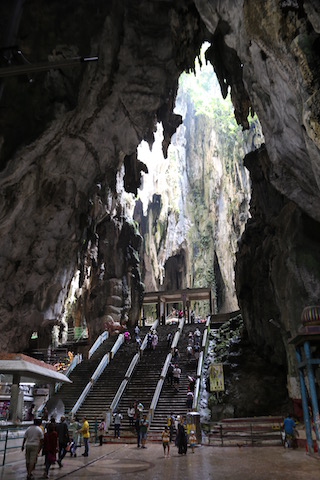
Only upon arrival at the Batu Caves did the previous night’s spectacle seem to make more sense. When I made it to the top of the steps and walked through the Cathedral Cave, I marveled at the ornate shrines but admittedly didn’t understand the entire story. Apparently, they told the story of Lord Murugan’s victory over the demon, Soorapadman. After walking through the cave, I climbed another staircase to a temple perched below stalactites, which looked like something you would only stumble across in Shangri-La. There I received a blessing and a Hindu priest placed consecrated ash on my forehead.
So why was I drawn to Batu Caves in the first place? After all, I am Christian, not Hindu. I am not sure why or how I ended up here. The Murugan statue is the second tallest statue of a Hindu deity in the world and certainly grabbed my attention in the photos I saw online. But what impressed me the most is the heights to which these pilgrims would march during their milk procession. And a pilgrimage worth such sacrifice and devotion is certainly inspiring.
Categories: Asia, Uncategorized

 latitudetravels.net
You’re so awesome! I don’t believe I’ve read through something like that before. So wonderful to find somebody with some unique thoughts on this subject matter. Really.. thanks for starting this up. This website is something that’s needed on the internet, someone with some originality!
LikeLike